Hey gardeners!
Spring planted bulbs, also known as summer bulbs or tender bulbs, can add a beautiful pop of color to your garden. Unlike spring blooming bulbs, which are typically planted the previous fall, summer bulbs should be planted in late spring/early summer, after the last frost date—around here (zone 6a), that’s May to June. They’re usually not frost tolerant, so you want to make sure there’s no chance of the ground freezing after you plant them. Most bulbs like to be planted relatively deep. The exact depth varies from plant to plant (check the package!) but a good rule of thumb is to plant them as deep as 2-3 times the height of the bulb. Make sure to water thoroughly—it takes a lot of water to reach bulbs buried deeply, but you want to make sure they don’t dry out while the roots are forming.
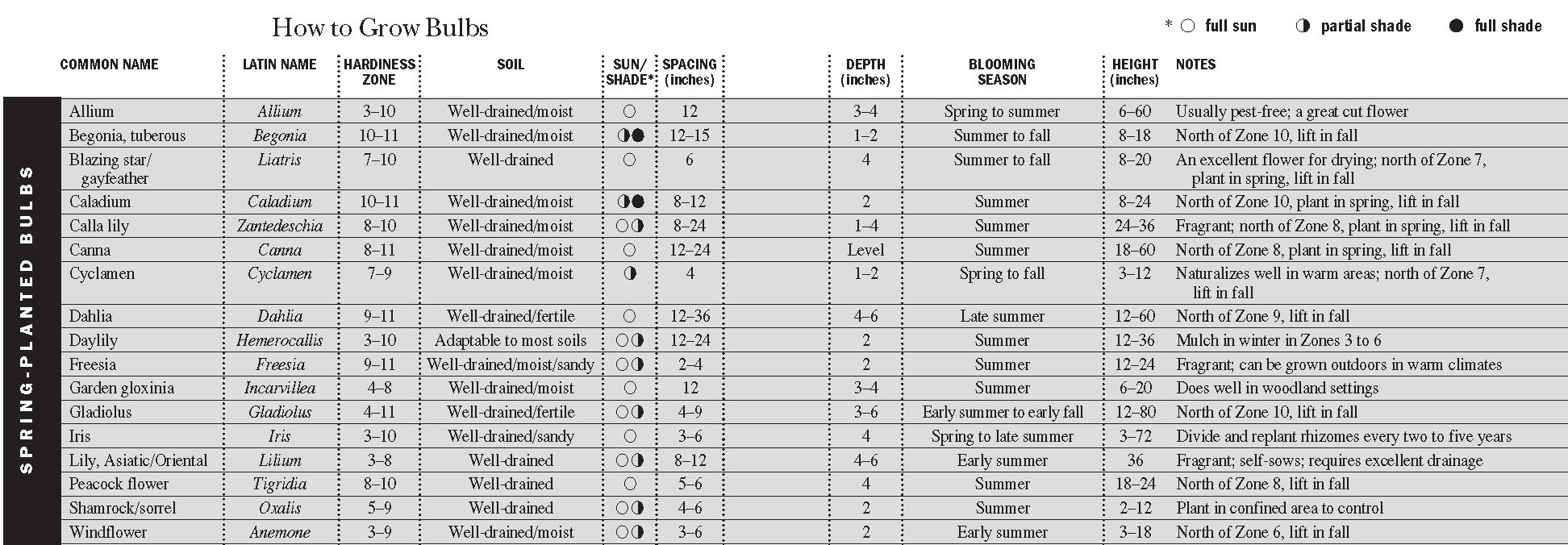
Here’s a chart of various spring planted bulbs. Popular ones for our area include dahlias, calla lilies, angel trumpets, daylilies, and gladiolus: https://www.almanac.com/sites/default/files/d6/spring-planted-bulbs.jpg
The main distinction between spring planted bulbs and fall planted bulbs is in how they overwinter. Fall planted bulbs can be left in the ground—they’re hardy enough to survive winter temperatures—and will come up again the following spring. However, summer bulbs have to be dug up or “lifted” in the fall and stored until it’s warm enough to replant them.
In general: it’s good to avoid cutting foliage from your bulbs until it has yellowed or started to die off on its own. The leaves of the plant are where photosynthesis occurs, so leaving them intact as long as possible allows the bulb to store energy, which it needs to bloom again the next year! So, the best time to lift summer bulbs is after the foliage has died off or been killed by frost. Then: cut any remaining stems/leaves to a few inches above the soil level and gently dig out your bulbs. Shake off as much excess soil as possible, allow them to dry out for a few days, and store in a cool, dry place like a basement or garage. Ideally, keep your bulbs in a box or a bag containing something like peat moss or vermiculite—in addition to cushioning them, this will help retain some moisture. It’s a balance: you want your bulbs to be dry enough that they don’t rot over the winter, but not so dry that they’re shriveled up by springtime!
More on spring planted bulbs:
https://cceoneida.com/resources/a-factsheet-on-bulbs
https://www.gardendesign.com/bulbs/how-to.html
https://hicksnurseries.com/spring-and-summer-blooming-bulb-care/
https://mgofmc.org/summer-blooming-bulbs
Finally, next Saturday we’ll be having an extra special workshop on planting flowers, designed for youth ages 7-14 and their guardians! You can sign up here: vinesgardens.org/events/.