
Hey gardeners!
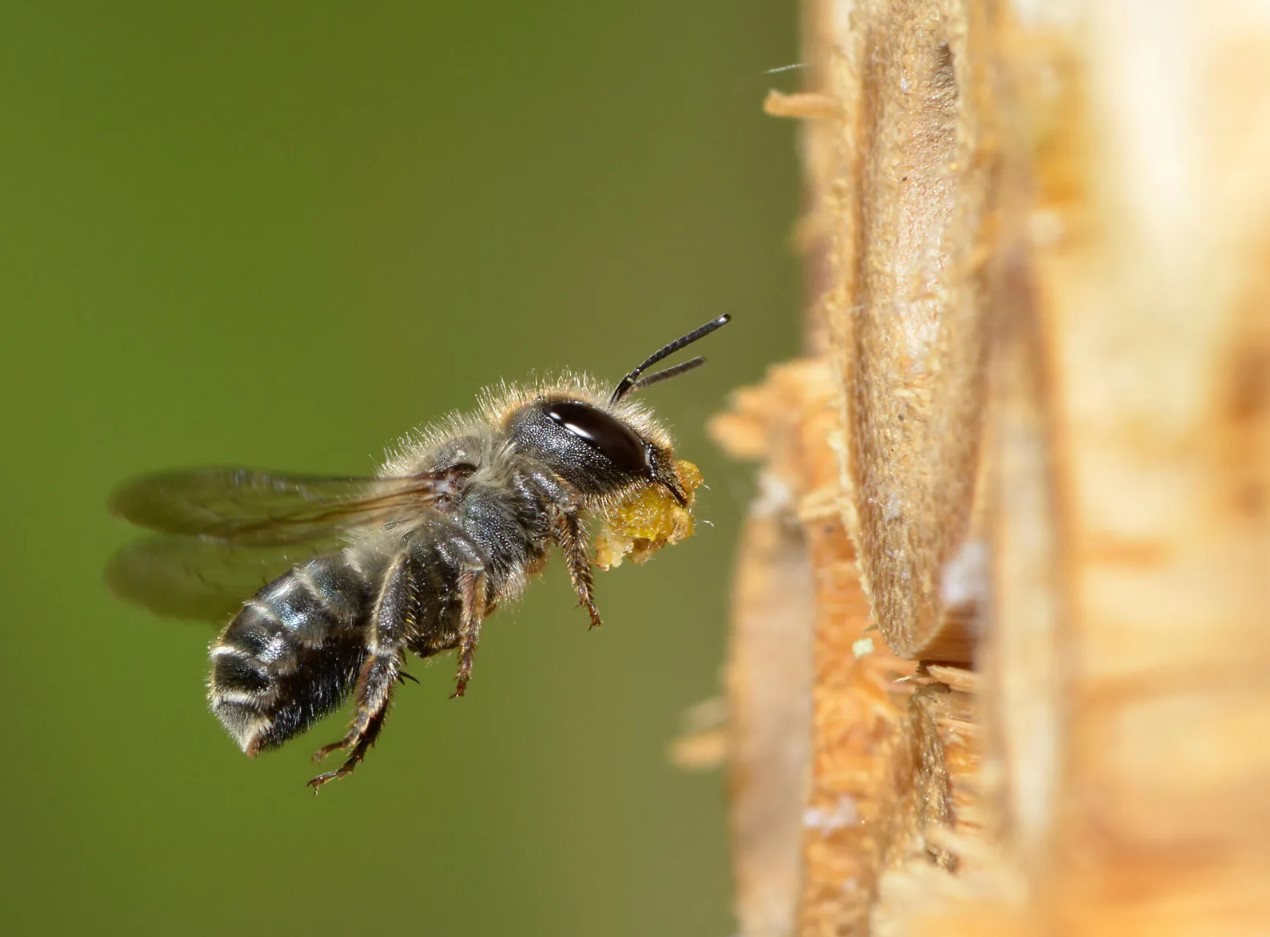
There are around 140 species of bees in the genus Osmia — popularly called “mason bees” — in North America. Unlike honey bees, mason bees are solitary, meaning they don’t live in hives. Instead, each female will find her own nest and lay her own eggs. This doesn’t mean they can’t live close together, though! Most mason bee houses consist of a series of tubes or cavities, perfect for many bees to lay eggs in. However, they should be cleaned or replaced periodically to curb the spread of parasites and disease.
While other types of solitary bees (carpenter bees or ground bees, for example) make new holes to nest in, mason bees will use an existing spot such as a hollow stem or a crevice. Eggs are laid in late spring, starting at the back of the nest. The female mason bee will build a mud partition between each one, and a “cap” to seal off the nest when she’s done.
The bees will spend a good chunk of their life cycles in these “cells” — the eggs will hatch, grow into larvae, then make a cocoon (the same way butterflies do!). By late summer, the eggs will have developed into fully-grown adults, who are dormant over the winter and finally emerge in early spring. Then the cycle starts over!
Mason bees are not aggressive — the males don’t have stingers, and females will sting only when trapped or squeezed. They are also incredible pollinators, particularly for native crops — in fact, many consider them to be more efficient than honeybees. This means they can be great for a garden!
More about mason bees:
https://extension.psu.edu/orchard-pollination-solitary-mason-bees
https://www.fs.usda.gov/wildflowers/pollinators/pollinator-of-the-month/mason_bees.shtml
Finally, here are a few resources on building your own mason bee house, if you’re interested:
Make sure to check out our spring workshop series! vinesgardens.org/events/.