Hey gardeners!
Composting can help you reduce your carbon footprint, and it’s great for your garden!
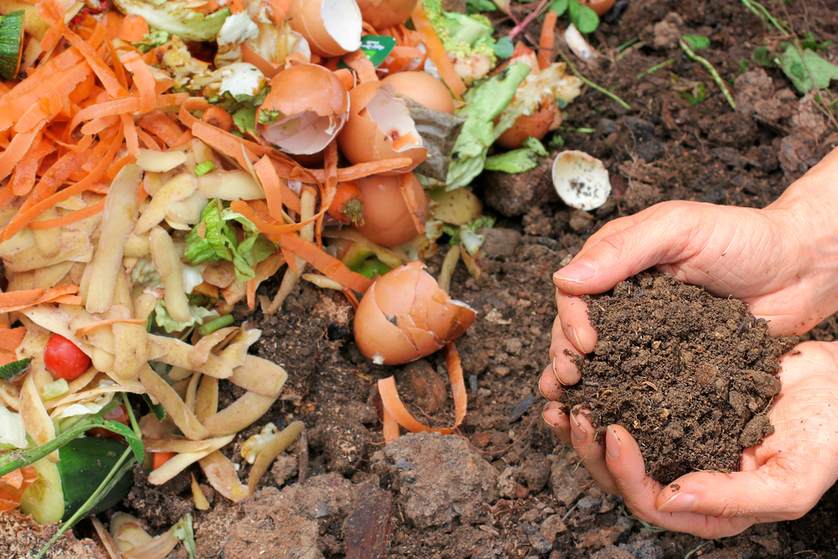
You can set up a compost box or pile right in your backyard. There, with a little maintenance, organic waste like food scraps and lawn trimmings is broken down by decomposers (usually microorganisms) into compost, which looks like dark soil. The benefits of this are twofold: first, it keeps waste out of the garbage (and therefore out of a landfill). Breaking it down via composting is a much more sustainable method of disposal. Second, compost is amazing—it’s high in nutrients and can be added to your garden to promote soil health, water retention, and plant growth! Plus, it reduces the need for chemical fertilizers.
Excited to start composting? Great! Here’s a general process to follow:
First, pick a spot for your compost bin. Try to choose somewhere that gets at least 3-4 hours of full sun per day, and that’s far enough away (at least 2 feet) from houses/fences/etc. that there’s room for airflow around the sides of the bin. Both of these things will help the decomposition process along! Additionally, make sure it’s somewhere you can reach with a hose or watering can—the pile needs to be kept moist for things to break down.
You’re also going to need a compost bin. There are lots of options for this—you can make one yourself out of wood pallets, or just buy one. Whichever you choose, make sure your bin has slots or openings in the sides to allow for airflow. Also, if you’re making your own, make sure to include plenty of access points, especially near the bottom, so that you can mix your pile as needed and collect the finished product.
The ingredients for compost are sorted into two categories: “greens,” which are rich in nitrogen, and “browns,” which are rich in carbon. Greens can be fruit and vegetable scraps, grass clippings, coffee grounds, or crushed eggshells. Browns include dry leaves, plant stalks and twigs, shredded paper (non-glossy) and brown paper bags, shredded cardboard, and untreated wood chips.
To fill your compost bin: start with a layer of browns, about 4 to 6 inches deep (twigs and wood chips will work well). Then, layer browns and greens like lasagna. When doing this, try to maintain a ratio of about 2:1 of browns to greens—this is to make sure your pile has the right balance of nutrients for the decomposers to do their thing. Always cover your food scraps with a layer of browns to avoid attracting animals.
Add water if needed to keep the pile from drying out—your combined materials should have the consistency of a wrung-out sponge—and use a garden fork to turn your compost about once a month to help with aeration.
Then, all you have to do is be patient! It can take 3 to 5 months for your compost to be ready to use. Finished compost should have almost no visible materials left. It should be dark, crumbly, and smell like soil. Once you have that, it’s ready to add to your garden!
Good luck, and happy composting!
More on composting:
https://www.epa.gov/recycle/composting-home
https://www.botanicgardens.org/blog/start-backyard-compost-bin
Finally, don’t miss our spring workshops! You can sign up here: