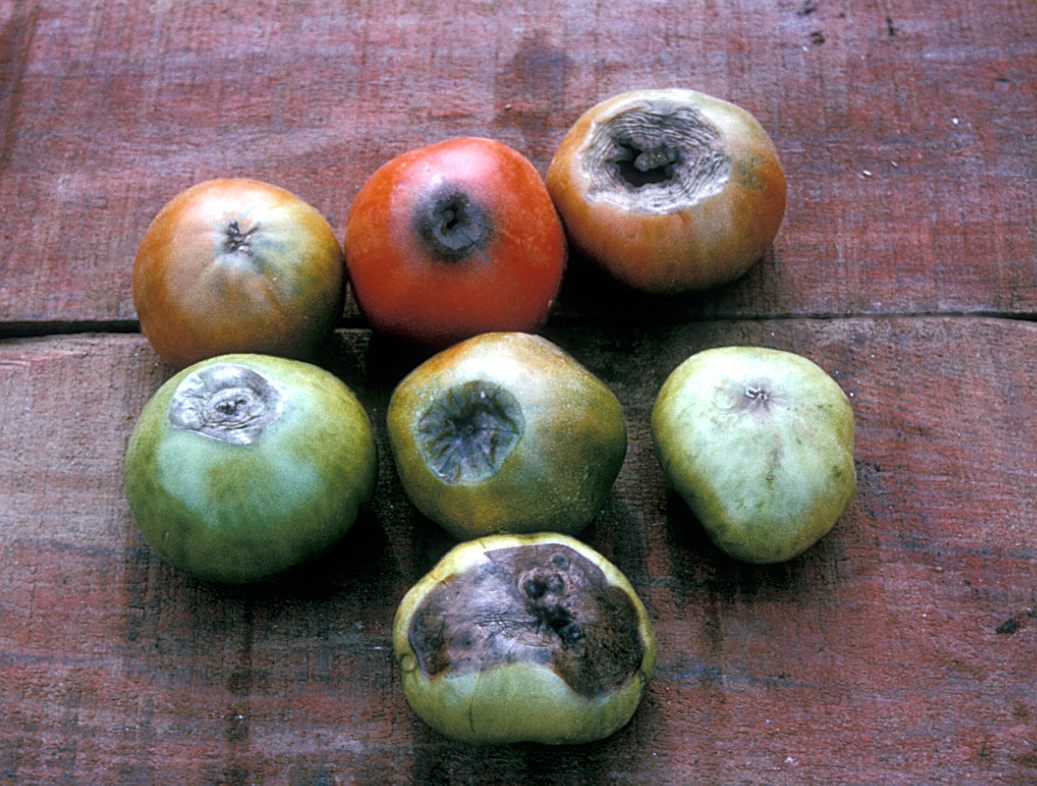
photo credit: www.purdue.edu
Hey gardeners!
In addition to pests, you’ll also learn to be on the lookout for some common garden diseases. Three diseases you’re likely to see are:
- blossom-end rot, which commonly affects tomatoes and peppers
- blight, which affects tomatoes and potatoes
- and powdery mildew, affecting squash and cucumbers
Once we observe what looks like a disease in our garden though, what can we do?
Epic gardening has an article that profiles (with images) the above mentioned diseases as well as many others. They begin with some general advice that “providing good airflow between plants and limiting overhead watering are the top two ways to prevent diseases from spreading throughout your garden.”
Concerning blossom end rot: “the symptoms will appear as dead, black tissue localized to the blossom end of the fruit….a lack of water or inconsistent shallow watering is most often the cause of this type of calcium deficiency.”
They go on to explain that “inconsistent water reduces the plant’s ability to uptake calcium from the soil. Too much fertilizer can also cause blossom end rot since an excess of nitrogen in the soil also reduces the plant’s ability to uptake calcium from the soil. Suggested treatments include more consistent, deep waterings for your plants.”
The other common disease mentioned and pictured above, blight, is one that nearly every tomato grower has heard of. Blight “commonly affects tomatoes and potatoes. Early blight appears as dark brown or black leaf spots. The black spots may even spread to the tomatoes themselves. Early blight infections generally occur in May or June following a very wet spring. Late blight appears as greenish-black spots on leaves, then stems, and finally will be found on the fruits. Late blight generally appears in August and can spread very quickly.”
And powdery mildew can be identified by “the powdery white spots it produces on the undersides of leaves. This fungus thrives in moist and humid conditions. If you catch it early, you can remove infected leaves and prevent its spread. However, if it spreads, it will cause the leaves to die, which will eventually result in plant death.”
As mentioned earlier, they recommend “maintaining adequate airflow between plants and avoiding overhead watering” to control this one.
For another source with even more tips on how to treat these and more common diseases, you can visit this article from Earth’s Ally.For in person learning on this subject, you can register today for next week’s ‘Common Garden Diseases’ workshop on our events page, part of our Green Thumb workshop series.