Hey gardeners!
How do you know if you have a pest problem in your garden? Are you looking at a harmless thing with wings or a beetle that could take out your squash? There’s a whole range of common pests, and a similar range in the problems they may or may not cause.
This article from Organic Grower’s School provides an initial process for dealing with pests once they’ve been observed in your garden. Maybe they’re not all that destructive, but maybe they’re becoming a real issue for your potential harvest. To determine which way you might go, they say “it’s essential to determine what the bug is and whether it’s a problem.” They begin by suggesting three first steps:
- Check out your garden daily
- Correctly Identify the bug
- Determine your tolerance level
They go on to review a general problem solving sequence and a few common pests, such as Cabbage butterfly larvae and Japanese beetles.
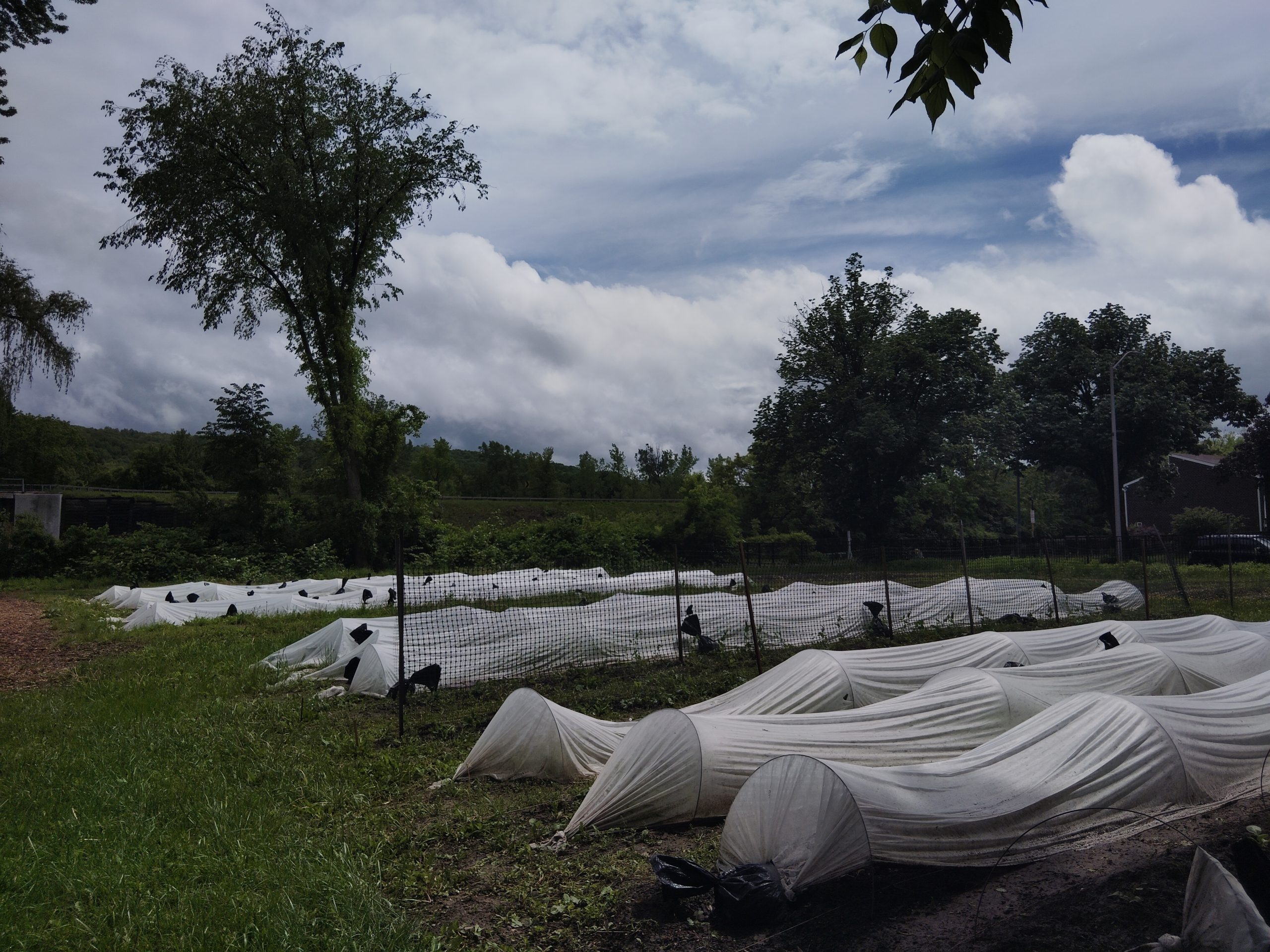
For further details about even more kinds of bugs, their life cycles, natural predators, and treatment options particular to them, check out this article from Savvy Gardening. Here you’ll learn more about the Cucumber beetle, for instance. For the Cucumber beetle, “All members of the cucumber family are hosts, including melons, cucumbers, pumpkins, gourds, and squash. Cucumber beetles are also sometimes found on corn, beets, beans, and other vegetables.” This article addresses the specifics of how to treat the “small, ragged holes in the leaves and flowers, and bacterial wilt” with preventative measures such as row covers (pictured above) or physical treatments such as organic pesticides specific to that bug.
And for EVEN MORE detailed profiles on specific bugs, their unique characteristics and methods of treatment, check out this article from Mother Nature News. You’ll learn about bugs like aphids, “small, soft-bodied sucking insects…that typically have a pear-shaped body one-tenth of an inch or less in length” and how to spot their signs, such as “curled, mottled leaves.” Aphids infested plants “become stunted and sickly, and a great deal of chlorophyll may be lost when leaves are devastated by aphid feeding.”
For in person learning opportunities, you can visit our events page for the upcoming Green Thumb Summer series!