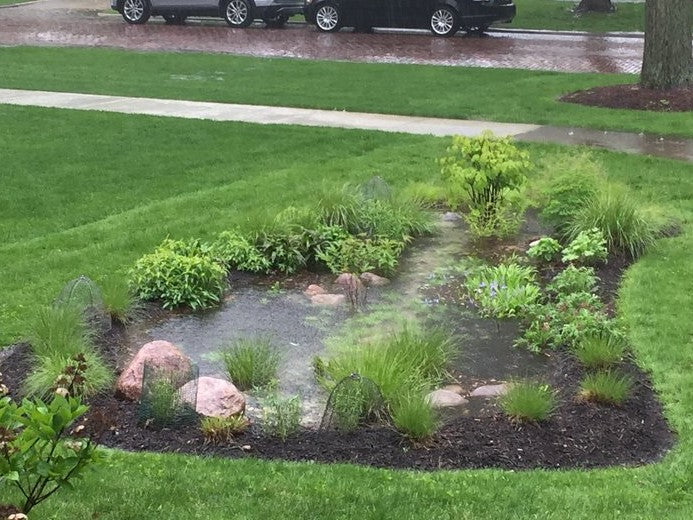
A rain garden is a beautiful and functional landscaping feature that helps manage stormwater runoff. Generally, they are garden areas of “native shrubs, perennials, and flowers planted in a small depression…formed on a natural slope. It is designed to temporarily hold and soak in rain water runoff that flows from roofs, driveways, patios or lawns.” Some of the main benefits of this technique is the filtration of polluted stormwater before it flows on to larger bodies of water and the management of pests such as mosquitoes from areas of standing water. Learn how to choose an effective location for a garden, what to plant, and some more ecological benefits here: https://groundwater.org/rain-gardens/
Beyond your garden, rain gardens contribute to broader environmental health by filtering out pollutants, such as chemicals, fertilizers, and sediments, which are commonly carried by stormwater runoff. They also help to maintain groundwater levels and prevent the erosion and pollution that typically occur with uncontrolled runoff. They act as a detention basin, temporarily holding and slowly releasing water, which reduces the peak flow of water into sewer systems and waterways during heavy rain events. Read more here: https://www.delriverwatershed.org/news/2021/11/1/how-rain-gardens-can-help-save-the-environment
For in-person learning opportunities on subjects related to gardening, keep an eye on: https://vinesgardens.org/events/