Hello!
Interested in starting a garden but low on space? You’re in luck! Today, we’re going to talk about Square Foot Gardening.
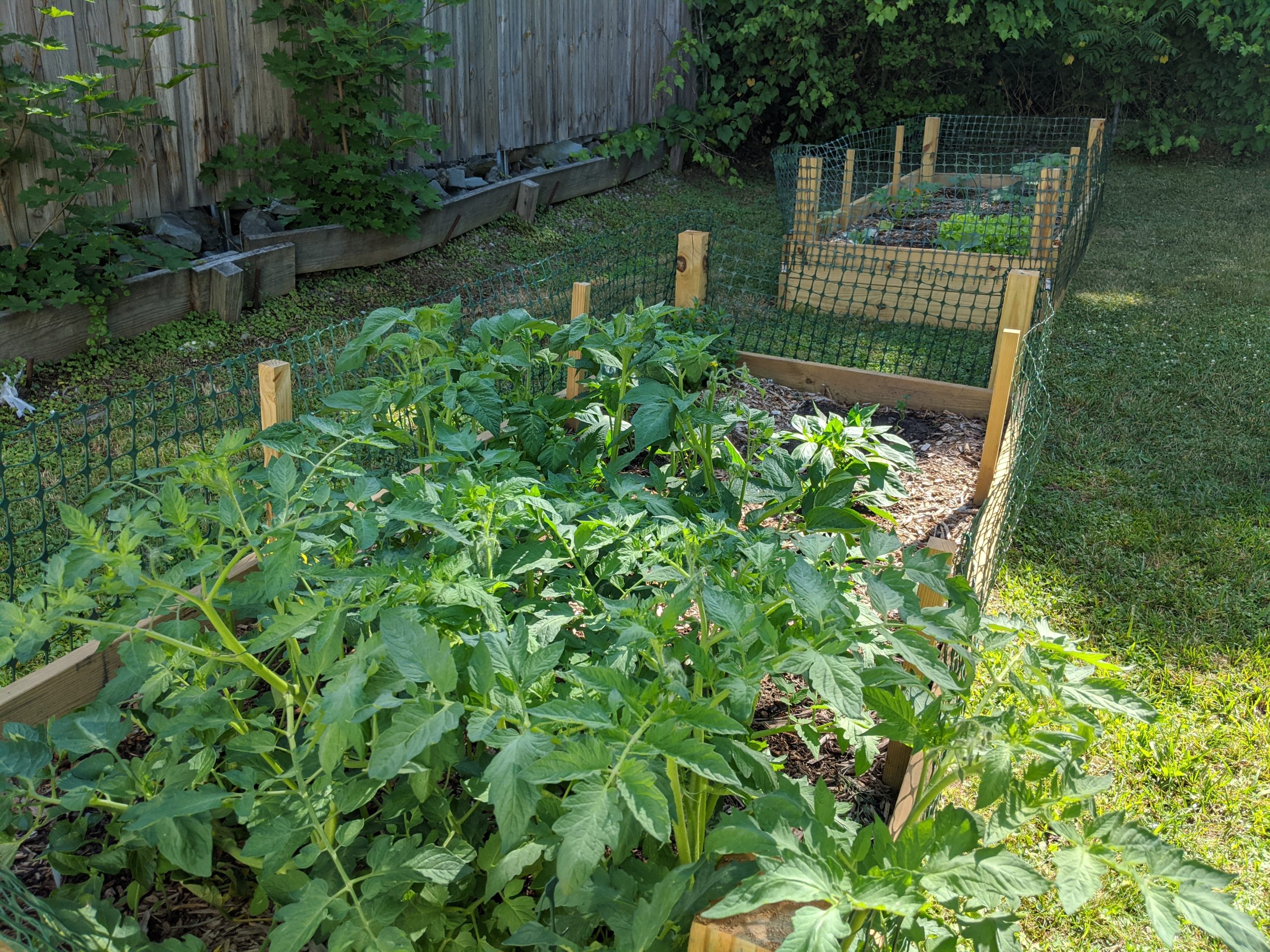
The basic premise is fairly simple: rather than planting in rows, this method calls for the use of small, rectangular plots — traditionally about 4’ x 4’ — divided into a grid of 1’ x 1’ squares. You can make these as long as you’d like (our community garden plots are roughly 4’ x 10’, depending on the available space). The key is to keep them narrow: that way, you can reach the entire garden from the outside edge, rather than having to step into it (which can compress the soil and disturb growing plant roots). Even better: these beds can easily be built raised, which means you can access them — and therefore do all your gardening — from a sitting or standing position, rather than having to kneel down or bend over.
The grid can be made of anything — sticks, string, even just lines drawn in the soil, as long as you can clearly see them. This will help with the organization of the garden, with one kind of plant per square.
Once you’ve decided what you’d like to plant, consult a square foot spacing chart like this one: www.phipps.conservatory.org/assets/documents/Square_Foot_Gardening_Guide_2020.pdf
Here’s the main idea: some plants, like radishes and carrots, are very small and don’t need much room, so you can plant up to 16 of them in a square.
On the other hand, larger plants like basil or oregano need more room, so you might only be able to fit 1 or 2 per square. Planting in squares like this allows for many different things to be grown in a relatively small garden bed. Plus: the plants being packed closely together makes it harder for weeds to get a foothold — always a plus!
Here are a few articles to learn more, if you’re interested:
www.bhg.com/gardening/how-to-garden/square-foot-gardening
www.almanac.com/planning-square-foot-garden-grow-more-less-space
We’ll talk more about this in our workshop this week on garden planning: vinesgardens.org/events/.